Navigating the Labyrinth: Persecution, Trauma, and the Promise of Rebirth
- Michaela Riley
- Feb 2
- 3 min read

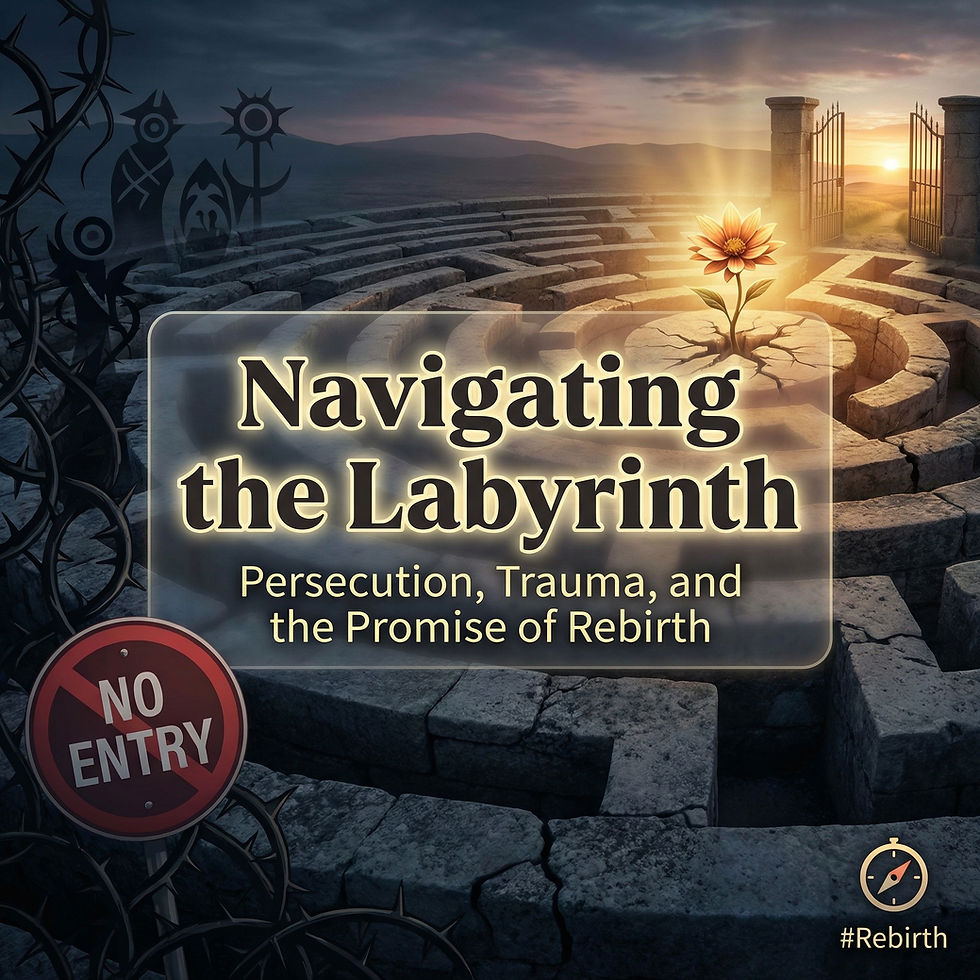
History is littered with shadows—Moments of collective fear that birthed injustice, only to vanish and reemerge in new forms. The witch hunts of the 16th and 17th centuries, in which thousands of women were accused of consorting with the devil and executed, are not just relics of the past. They are mirrors reflecting humanity’s recurring tendency to scapegoat the vulnerable in times of crisis. In Labyrinth of Shadows: The Witch’s Rebirth Part I, author Anna Kolding’s execution and her rebirth as Merona offer a powerful parable of this cyclical trauma—and the fragile hope of breaking free from it.
The Shadows of History: A Tale of Trauma and Resilience
The story of Anna Kolding is a microcosm of the European witch trials. Branded a witch during a surge of religious paranoia, she becomes a scapegoat for a village’s fears—wars, famine, and disease. Her trial, filled with false testimonies and psychological manipulation, ends in a pyre. Yet, in a twist that blurs myth and metaphor, Anna is reborn as Merona, a witch cursed with the memories of her death. This rebirth isn’t just a supernatural plot device; it symbolizes the persistence of trauma. Injustice, like Anna’s, does not die easily. It lingers in the cultural psyche, haunting societies through systemic inequality, modern conspiracy theories, and the vilification of minorities.
Scapegoating Then and Now: How Fear Fuels Persecution
Witch hunts thrived on a toxic mix of fear, power, and misinformation. When communities faced inexplicable crises, they turned to familiar tools of control: blame and violence. Anna’s story mirrors historical patterns—women, often marginalized, were easy targets. But the mechanisms of persecution persist today. Consider how refugees are blamed for economic instability, or how marginalized groups are scapegoated during pandemics. The “labyrinth” of history is not linear; it’s a maze where we often find ourselves returning to the same dead ends.
From Ashes to Rebirth: The Transformative Power of Memory
Merona’s rebirth is both a curse and a catalyst. Burdened with the trauma of her execution, she must confront the very society that destroyed her. This duality captures the essence of intergenerational trauma: the scars of past injustices shape present realities. Yet, Merona’s journey also hints at transformation. By embracing her past—and perhaps altering it—she embodies the potential for healing. In real-world terms, this narrative calls for reckoning with history. When societies confront their darkest chapters—like the US grappling with slavery or South Africa with apartheid—they take the first step toward reconciliation.
Breaking the Cycle: Can We Navigate a New Path?
The central question posed by Labyrinth of Shadows is as old as time itself: Is humanity doomed to repeat its mistakes, or can we forge a different path? History provides examples of both. The cycles of persecution are maddeningly persistent, as seen in the resurgences of antisemitism, Islamophobia, and transphobia. Yet, there are also cracks in the labyrinth. Movements for racial justice, LGBTQ+ rights, and environmental equity prove that collective action can dismantle oppressive systems. Merona’s rebirth reminds us that while trauma is inevitable, it need not define the future.
Conclusion: Illuminating the Path Forward
Anna’s story, and its rebirth as Merona, is a call to action. It urges us to look beyond the immediate shadows of the present and recognize how they’ve been shaped by the past. Breaking cycles of violence requires more than individual courage—it demands societal introspection, education, and empathy. Just as Merona chooses to confront her village’s legacy, we must ask ourselves: What ghosts are we perpetuating? And how can we transform their echoes into stories of justice?
The labyrinth of history is complex, but it is not insurmountable. By acknowledging our shared traumas and embracing the possibility of rebirth, we can navigate toward a future where the lessons of the past are not forgotten—but remade into something just.
